Agroforstsystem mit Wildobst und Walnussbäumen
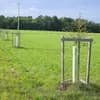
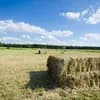
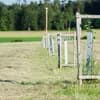
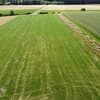
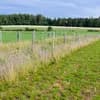
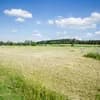
In 2018, an agroforestry system was established on two fields totaling 3 hectares in a district of the municipality of Greding in the Roth district. The site receives approximately 700 millimeters of precipitation annually, with an average temperature of 10°C in recent years. The predominant sandy loam soil was formed by the dissolution of Jurassic limestone banks and varies in thickness. In the five rows of trees, comprising a total of 58 trees, only fruit trees (serviceberry, service tree, walnut, hazel, pear) were planted at 15-meter intervals. Between the rows, farming can continue on a 30-meter-wide strip. Over the next few years, the trees will be gradually pruned to a height of 4–5 meters. Two hedgerows were planted alongside the rows of trees to break the wind and enhance the ecological value of the area. Seventy-five percent of the costs for establishing the AFS were covered by the Bavarian Landscape Conservation and Nature Park Guidelines (LNPR) and funding from the District of Middle Franconia.
Agroforestry system type:
Silvoarable system (woody and arable crops incl. intercropped permanent crops)Size of agroforestry system area(s) (in ha):
3.25Percentage of area under trees/shrubs (in %):
10.769Establishment (date):
Dec 31, 2017Farming sectors:
- Livestock farming
Tree species:
- Pear (Pyrus communis)
- Wild Service Tree (Sorbus torminalis / Torminalis glaberrima)
- Service Tree (Cormus domestica)
- English / Persian Walnut (Juglans regia)
- Turkish Hazel (Corylus colurna)
(Intended) use of trees:
- production stemwood
- food production (e.g. production fruit/nut)
(Intended) use of the shrubs:
- environmental benefits (incl. carbon/ windbreaks/ animal welfare/ biodiversity)
Main crop types in the agroforestry system:
- field grass
Motivation/rationale for establishing or maintaining agroforestry system:
- Landscape / aesthetics