Diverser Agroforst im Market Garden
Lat: 8.7900824, Lng: 52.0156844
Solidarische Landwirtschaft Ackervielfalt eG / BIO HOF BRINKMANN
Fröbelstraße 4, 32791 Lage, Nordrhein-WestfalenThe Brinkmann Organic Farm owns the land managed by Solidarische Landwirtschaft Ackervielfalt eG, which grows vegetables using the market-garden system.
The landowner and tenant share the common goal of integrating various fruit trees into the land to establish a productive, resilient, and diverse
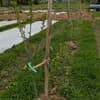
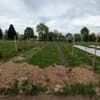
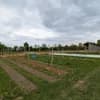
agroforestry system. We hope that the agroforestry system will improve soil life, promote biodiversity, and positively influence the microclimate—with the goal of making farming more resilient and transforming the field into a living, diverse ecosystem—using climate-resilient trees and shrubs. The system is intended to produce table fruit for the members of the Solawi.
Agroforestry system type:
Silvoarable system (woody and arable crops incl. intercropped permanent crops)Size of agroforestry system area(s) (in ha):
1.6Percentage of area under trees/shrubs (in %):
37.5Establishment (date):
Dec 6, 2024Site specifics:
- susceptibility to erosion
Farming sectors:
- Arable farming
Tree species:
- Apple (Malus domestica)
- Pear (Pyrus communis)
- Alder (Alnus spp.)
- Sweet Chestnut (Castanea sativa)
- Cherry / Wild Cherry (Prunus avium)
- Lime / Linden (Tilia spp.)
- Plum (Prunus domestica)
- Service Tree (Cormus domestica)
- English / Persian Walnut (Juglans regia)
- Common Fig (Ficus carica)
- Quince (Cydonia oblonga)
- Medlar (Crataegus germanica)
- Persimmon (Diospyros kaki)
- Apricot (Prunus armeniaca)
- Peach (Prunus persica)
- Russian Olive (Elaeagnus angustifolia)
- White Mulberry (Morus alba)
- Black Mulberry (Morus nigra)
(Intended) use of trees:
- food production (e.g. production fruit/nut)
- environmental benefits (incl. carbon/ windbreaks/ animal welfare/ biodiversity)
Shrub species:
- Blackberry (Rubus fruticosus)
- Juneberry (Amelanchier lamarckii)
- Raspberry (Rubus idaeus)
- Cornelian Cherry (Cornus mas)
- Honeyberry (Lonicera caerulea)
- Currants (red/ white/ black) (Ribes spp.)
- Jostaberry (Ribes × nidigrolaria)
- Gooseberry (Ribes uva-crispa)
- Paw Paw (Asimina triloba)
(Intended) use of the shrubs:
- food production (e.g. production fruit / nut)
- environmental benefits (incl. carbon/ windbreaks/ animal welfare/ biodiversity)
Main crop types in the agroforestry system:
- vegetables
Motivation/rationale for establishing or maintaining agroforestry system:
- establish ecological balance
- Higher productivity
- Erosion protection
- Diversified product range
- Contribution to climate protection / resilience