Alleen 3
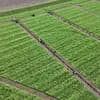
In Kleve, Rhine-Waal University of Applied Sciences, together with the city of Kleve and the Haus Riswick Agricultural Research Center, has converted 3.3 hectares of farmland into an agroforestry demonstration area. Since January 2025, a total of 349 trees and shrubs have been planted in several planting phases on a total of six agroforestry tree strips. The tree strips are three to five meters wide, allowing for the planting of trees of varying heights and widths. The aim is to test the best combinations of trees and strip widths for the Lower Rhine region. In addition, the direct costs of agroforestry strips are to be determined, as they have a direct impact on farm management but have rarely been the focus of research projects to date.
Further contacts:
Dr. Ana Kreter (HSRW), ana.kreter@hochschule-rhein-waal.de
Michael Bernsten (Haus Riswick), michael.berntsen@lwk.nrw.de
Dirk Posdena (City of Kleve), dirk.posdena@kleve.de
-1f031f3f1f8f0f67-100x100.webp&w=256&q=75)
-44976bedccf69a8e-100x100.webp&w=256&q=75)
Agroforestry system type:
Silvoarable system (woody and arable crops incl. intercropped permanent crops)Size of agroforestry system area(s) (in ha):
3.3Percentage of area under trees/shrubs (in %):
4.55Establishment (date):
Jan 31, 2025Farming sectors:
- Fodder production
Tree species:
- Sweet Chestnut (Castanea sativa)
- Sessile Oak (Quercus petraea)
- Small-leaved Linden (Tilia cordata)
- Poplar (Populus spp.)
- Turkish Hazel (Corylus colurna)
- Wild Service Tree (Sorbus torminalis / Torminalis glaberrima)
- Pear (Pyrus communis)
- Rowan (Sorbus aucuparia)
(Intended) use of trees:
- production stemwood
- material use
Shrub species:
- Raspberry (Rubus idaeus)
- Common Broom (Cytisus scoparius)
- Dog Rose / Rosehip (Rosa canina)
(Intended) use of the shrubs:
- cultural benefits (incl. recreation/ landscape)
Main crop types in the agroforestry system:
- oats
- rye
Motivation/rationale for establishing or maintaining agroforestry system:
- Higher productivity